2026-10-22 ·
How to Improve Ventilation in Older Werribee Houses
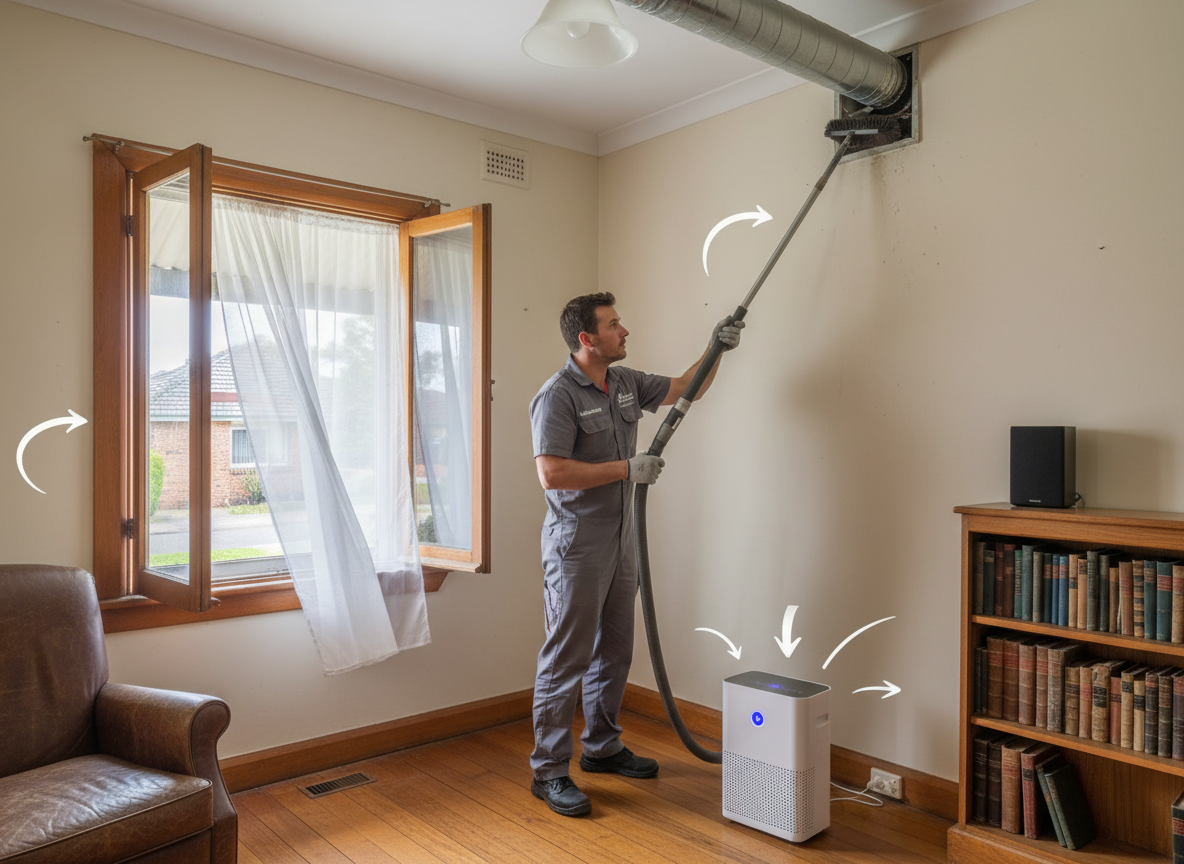
In older Werribee houses, restoring proper ventilation begins with a full air duct inspection followed by residential air duct cleaning that removes accumulated dust and debris, typically improving airflow by 30-50% in homes built before 1990. Many properties in Riverbend and Wyndham Vale still rely on original metal duct runs that have collected lint, pollen and construction residue over 40-60 years. Warm summer temperatures in the City of Wyndham accelerate dust circulation through unsealed joints, making regular maintenance essential for maintaining indoor air quality.
Assessing Ventilation in Pre-1990 Werribee Homes
Houses in Tarneit and Werribee South from the 1960s-1980s commonly feature narrow rectangular ducts with limited access points and minimal insulation. Start by checking supply and return vents in each room for visible dust layers or weak airflow when the system runs. Measure room-to-room temperature differences on a warm summer afternoon; differences exceeding 3°C usually indicate blocked or collapsed sections. Professional inspection using camera equipment reveals hidden restrictions that homeowners cannot see from registers alone. Homes near Werribee Park often sit on clay soils that shift slightly with seasonal moisture changes, occasionally pinching flexible duct connections over time.
Common Airflow Restrictions in Local Housing Stock
Single-storey weatherboard and brick veneer homes throughout the City of Wyndham frequently have ducts routed through low roof spaces where summer heat reaches 50°C, causing joints to loosen. Pet hair and cooking grease add to the buildup in properties that have never had the system opened since installation. In Riverbend estates, many 1970s homes still use the original 100 mm branch lines that now restrict modern airflow needs. Checking for disconnected sections at the plenum and collapsed flex runs under insulation prevents wasted energy and uneven cooling. These issues compound during the warm months when residents keep windows closed for air conditioning.
Practical Modifications for Better Air Movement
After initial cleaning, homeowners can add adjustable dampers on main trunks to balance supply between bedrooms and living areas. Replacing 100 mm branch ducts with 150 mm lines where ceiling space allows increases volume without replacing the entire system. Sealing joints with mastic rather than tape stops conditioned air from leaking into hot roof cavities. In Wyndham Vale homes, installing a fresh-air intake connected to the return plenum brings in filtered outside air during milder spring and autumn periods. These steps work best when paired with air duct cleaning improve air quality to remove remaining contaminants before modifications.
Seasonal Maintenance for Werribee's Temperate Climate
Warm summers increase dust movement through ducts, so schedule inspection before November when outdoor pollen peaks. After bushfire events, fine ash can enter through external vents and settle in low-velocity return ducts. Spring weather changes quickly in the City of Wyndham, so clearing debris before variable winds arrive prevents pressure imbalances. Preparing Ducts for Werribee's Variable Spring Weather outlines timing that matches local conditions. Annual checks in homes around Werribee Plaza keep systems responsive to the rapid temperature swings common between October and December.
When to Call Local Specialists
Persistent musty smells or rooms that never reach set temperatures after basic register cleaning point to deeper restrictions requiring camera inspection. Technicians based at 114B Watton St, Werribee VIC 3030 operate 24/7 and can access tight roof spaces typical of older Werribee construction. For properties in Hoppers Crossing and Tarneit, same-day response helps before summer peaks. residential air duct cleaning performed by technicians familiar with local housing stock restores even airflow without unnecessary replacements. Regular attention to these systems keeps older homes comfortable through the warm months without major structural changes.