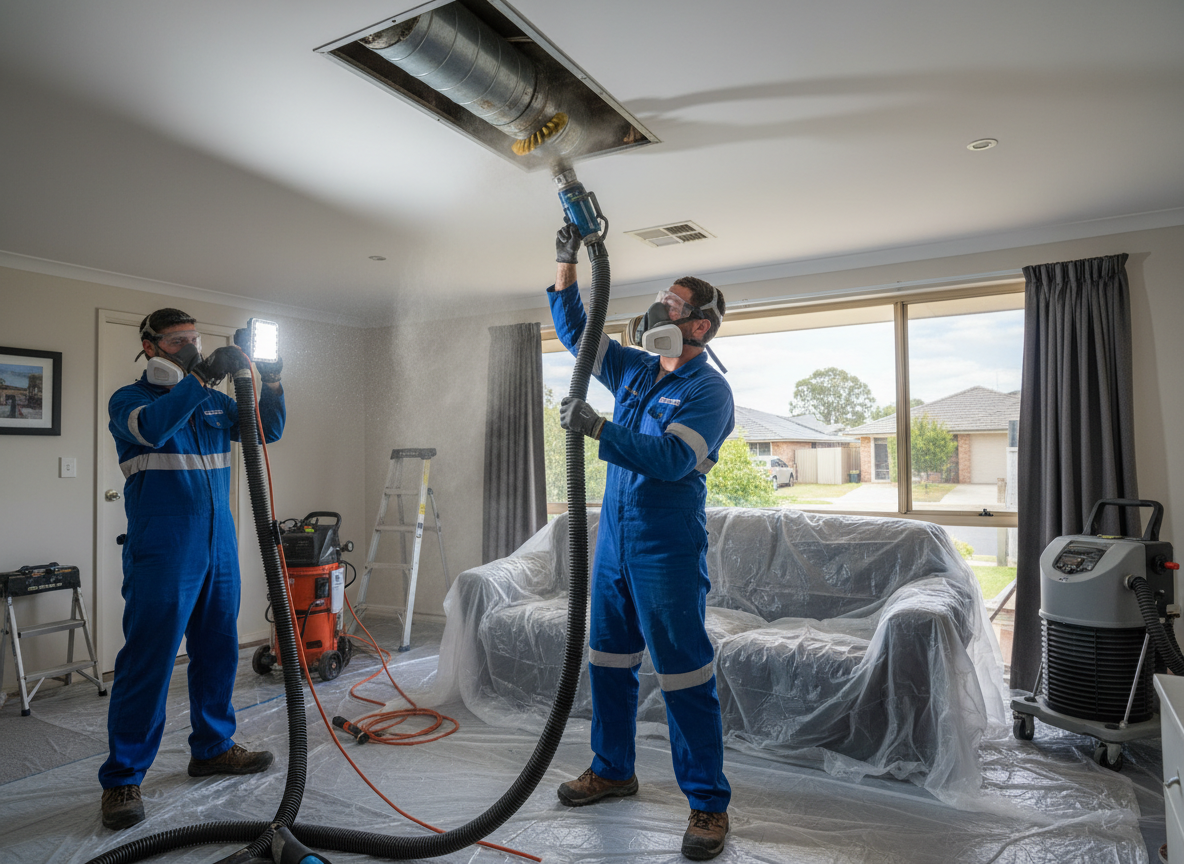
Homes in older pockets of Wyndham Vale and near Werribee Park often have galvanized steel ductwork installed before 2000 that traps fine dust and pollen stirred up during the warm summers typical of the region. When residents run air conditioning more frequently from November through March, that accumulated material circulates through the system and reduces airflow. Technicians working these streets routinely remove heavy lint loads from branch lines that standard vacuum tools miss because the original flex duct runs were never sealed at the joints.
In Riverbend and parts of Tarneit where newer estates sit close to open paddocks, wind-blown soil enters through unsealed return-air grilles during dry spells. The fine silt settles in the main trunk lines and mixes with household fibres, creating a compacted layer that restricts the blower motor. Crews use rotating brushes sized for 150 mm to 300 mm ducts to break this layer without damaging the thin metal walls common in City of Wyndham stock.
Near Werribee Plaza and along the Werribee South corridor, two-storey homes frequently have vertical risers that collect moisture during humid summer nights. Left untreated, the damp sections foster mould colonies that release spores back into living areas. Cleaning teams isolate these runs, apply HEPA-filtered negative pressure, and finish with an antimicrobial rinse only where visible growth appears, then verify clearance with a borescope before restoring airflow.
Technician insight
In Werribee, the thing that catches most people out with Airduct cleaning near me is the amount of fine silt that settles in trunk lines of homes built on the western side of the freeway corridor; the open paddocks around Wyndham Vale send dust straight into unsealed returns every dry summer, and it packs hard enough that standard shop-vac attachments never reach it.
Blocked Returns in Tarneit Two-Storey
Homeowner reported weak airflow upstairs during the first warm spell of the season. Inspection found compacted soil and pet hair in the vertical riser serving the second floor. Crews isolated the line, brushed and vacuumed under negative pressure, then confirmed clearance with a borescope. Airflow returned to normal and the family noticed less dust on surfaces within a week.
How it works
- 1
Site Inspection
Technician maps every accessible vent and return in the home, noting duct material, age and any visible blockages before starting equipment setup.
- 2
Negative Pressure Setup
HEPA vacuum is connected to the main trunk and the system is placed under negative pressure to contain dust during brushing.
- 3
Mechanical Cleaning
Rotating brushes and compressed air tools dislodge debris from branch lines and trunk runs while the vacuum captures all material.
- 4
Final Verification
Borescope inspection confirms cleared ducts and registers are reinstalled with new filters where required before the system is returned to service.
Pricing
Price varies with number of storeys, vent count and duct length typical in Tarneit and Wyndham Vale homes; call for on-site assessment.