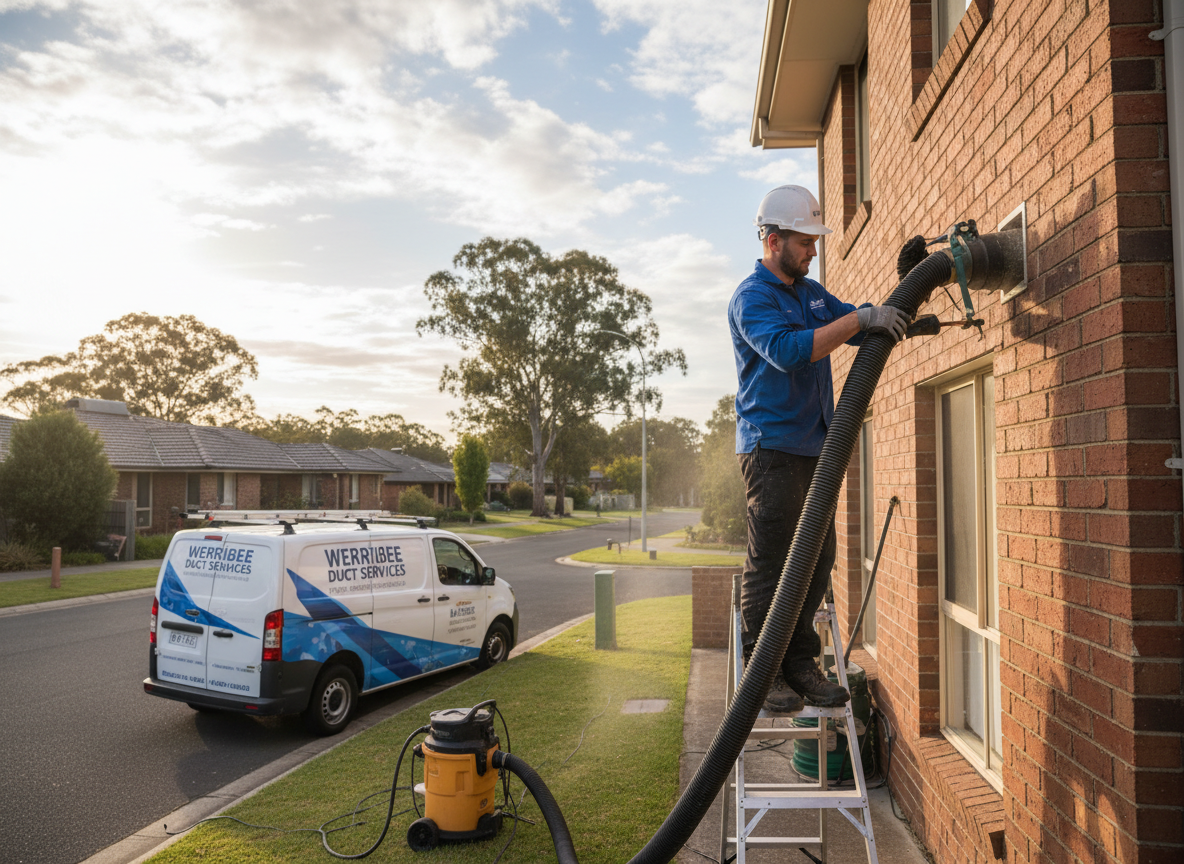
Werribee homes built before the 1990s often feature metal ductwork routed through roof spaces that collect fine red dust blown in from the surrounding plains during the long warm summers. This dust mixes with pollen from Werribee Park and Werribee Open Range Zoo grounds, reducing airflow and triggering allergy complaints in Riverbend and older sections of Wyndham Vale. Regular cleaning restores static pressure without disturbing insulation or ceiling linings common in these properties.
Newer estates in Tarneit and Wyndham Vale use flexible duct runs that trap pet hair and cooking grease more readily than rigid metal systems. Warm summer temperatures drive higher air-conditioner use, pushing contaminants deeper into branches that reach bedrooms. Technicians must map each run from the central return before vacuuming to avoid collapsing the lightweight flex sections during negative-pressure extraction.
City of Wyndham properties near the river experience occasional humidity spikes that encourage mould on duct interiors when combined with dust layers. Cleaning crews isolate these sections first and use HEPA-filtered equipment to prevent spores from re-entering living spaces. Access through roof hatches or external vents is standard, as many homes lack basement utility rooms.
Post-clean verification includes checking supply registers in main living areas and confirming balanced airflow across the system. Homeowners in Hoppers Crossing and Werribee South frequently request this step after noticing uneven cooling once summer temperatures rise.
Technician insight
In Werribee the thing that catches most people out with local air duct cleaning is the heavy red dust layer that settles in roof-space ducts of 1970s-80s weatherboard homes near the river during the warm summers, especially when the system has never been accessed since installation.
Tarneit Flex-Duct Restriction
A Tarneit homeowner reported weak airflow from ceiling vents after several summers of continuous air-conditioner use. Inspection revealed compacted dust and pet hair blocking flexible duct sections running to the bedrooms. The team isolated the branches, performed targeted agitation and extraction, then verified balanced pressure across all registers. Airflow returned to normal without any duct replacement.
How it works
- 1
Site Assessment
Technician inspects duct layout, access points and visible contamination from the roof space or external vents in the specific Werribee property.
- 2
System Isolation
Registers are sealed and a negative-air machine is connected to contain dust while work proceeds through the City of Wyndham home.
- 3
Agitation and Extraction
Brushes and compressed air dislodge debris along each branch before the vacuum removes it, paying special attention to flexible runs common in Tarneit.
- 4
Final Airflow Check
All registers are reopened and static pressure is measured to confirm restored performance before equipment is removed.
Pricing
Pricing varies by number of runs, access difficulty and whether flexible duct replacement is needed; contact for a property-specific quote.