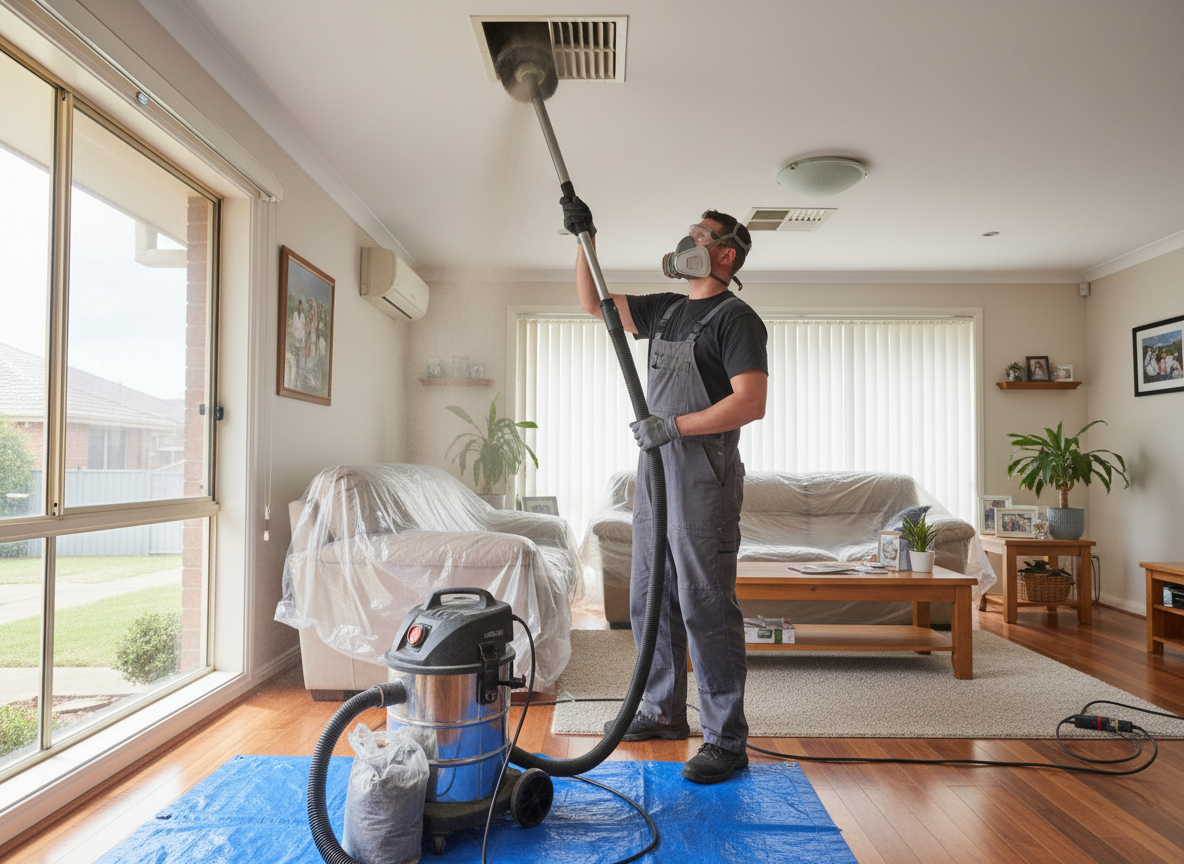
Werribee homes in Tarneit and Wyndham Vale often feature duct systems installed during the 1990s and early 2000s expansions, with flexible duct runs that trap fine red soil dust carried on prevailing winds from open paddocks. Warm summers increase pollen load from Werribee Park and nearby grasslands, pushing particles deeper into branch lines where standard household filters miss them. Technicians working these older layouts must account for sagging sections and poor original sealing that allow bypass air to carry contaminants back into living spaces.
Riverbend estates and streets near Werribee Plaza commonly have return-air grilles placed low on walls, pulling in floor-level dust during the long dry periods between summer rains. This creates heavy accumulation at the first bend after each grille, restricting airflow and forcing the system to run longer on hot days. Cleaning these runs requires sectional access rather than whole-system negative pressure alone, because the terrain is flat and ducts often run under floor cavities with limited access points.
Homes in Hoppers Crossing and Werribee South sit on heavier clay soils that hold moisture longer after rare heavy showers, leading to occasional condensation inside metal trunk lines during humid evenings. This moisture mixes with the constant fine dust load and forms a sticky film that standard brushes alone cannot lift. Proper residential cleaning here includes targeted agitation followed by HEPA vacuum extraction to prevent re-deposition when the system restarts.
Technician insight
In Werribee the thing that catches most people out with residential airduct cleaning is how quickly fine red dust from the surrounding plains settles into low return grilles during warm summers, especially in pre-2005 homes around Riverbend and Tarneit where original duct sealing was minimal.
Tarneit Home with Summer Pollen Load
Homeowner in Tarneit reported reduced airflow and visible dust on vents after a long warm period. Inspection found heavy pollen and red dust packed at the first bend after each low return grille. Sectional agitation and HEPA extraction cleared the lines; airflow readings returned to normal once the system restarted.
How it works
- 1
Site Assessment
Technician inspects all accessible grilles, trunk lines and flexible runs in the home, noting access points and any low spots where dust settles due to Werribee's flat terrain.
- 2
Negative Pressure Setup
Equipment is connected to create directed airflow through the duct network while protecting the furnace or air-handler components common in local homes.
- 3
Agitation and Extraction
Rotating brushes and compressed air tools dislodge buildup along each branch, with continuous HEPA extraction removing the fine red dust typical of the Wyndham plains.
- 4
Final Airflow Check
System is restarted and grille velocities measured to confirm restored airflow before departure from the property.
Pricing
Cost depends on number of runs, access difficulty and whether flexible duct sections need sectional work.