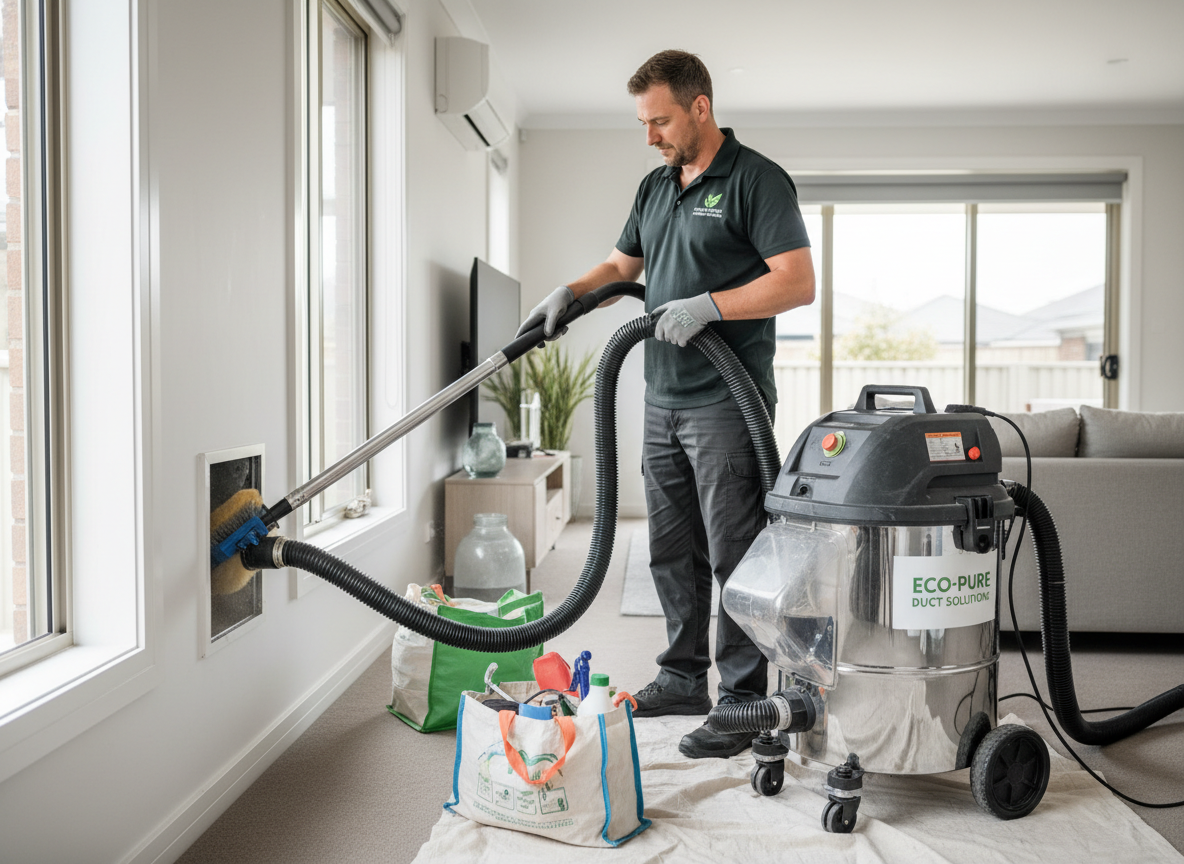
In the City of Wyndham, homes in Tarneit and Wyndham Vale often feature flexible duct runs installed during the 2000s housing boom. Warm summers drive heavy air-conditioner use, pulling fine red soil dust and pollen through the system and into living spaces. Eco-friendly cleaning relies on enzyme-based foams and HEPA-filtered negative-air machines rather than solvent sprays, loosening debris without leaving chemical residues that could off-gas in the region's temperate conditions.
Older properties near Werribee Park and the Werribee Open Range Zoo frequently have rigid metal trunk lines mixed with flexible branches that trap moisture during occasional high-humidity days. Technicians must isolate each branch to avoid collapsing older flex duct while still capturing the fine dust that settles in low-velocity sections. Using only biodegradable surfactants prevents damage to any existing insulation wrap and keeps the process compliant with local environmental expectations for properties close to open parkland.
Nearby suburbs such as Hoppers Crossing and Werribee South see similar patterns, but river-adjacent homes can pull additional organic matter into return plenums. Eco-friendly protocols include pre-inspection with cameras to identify collapsed sections or rodent activity before any agitation begins. This step prevents pushing contaminants deeper into the system and ensures the final rinse uses only potable water and food-grade enzymes that break down without affecting indoor air quality once the home is reoccupied.
Technician insight
In Werribee, the thing that catches most people out with eco-friendly air duct cleaning is the fine red soil dust that blows in from the plains during warm summers and settles in low-velocity sections of flex duct, especially in Tarneit homes built on the old market-garden blocks where the ground stays powdery for months.
Tarneit Split-Level Home
Heavy summer dust from the surrounding plains had coated the return runs of a 2008 split-level house. Camera inspection showed thick layers in the main trunk near the laundry. Enzyme agitation and HEPA extraction removed the organic load without solvents. The homeowner reported clearer air and less filter changes within a week.
How it works
- 1
Initial Camera Inspection
Technicians run a scope through every accessible trunk and branch to map dust loads and locate any damaged sections before agitation starts.
- 2
Zone Isolation and Protection
Registers are sealed and furniture is covered while negative-air machines are positioned to contain debris within the duct network.
- 3
Enzyme Agitation
Plant-based foam is introduced through access points and agitated with soft-bristle brushes to loosen organic buildup without solvents.
- 4
HEPA Extraction and Rinse
Contaminants are pulled into sealed collection units, followed by a low-pressure rinse using only water and biodegradable enzymes.
- 5
Final Verification
A second camera pass confirms cleanliness and the system is returned to normal operation with a written report for the homeowner.
Pricing
Cost depends on number of runs, access difficulty, and whether flex duct needs replacement; upfront quotes provided after inspection.