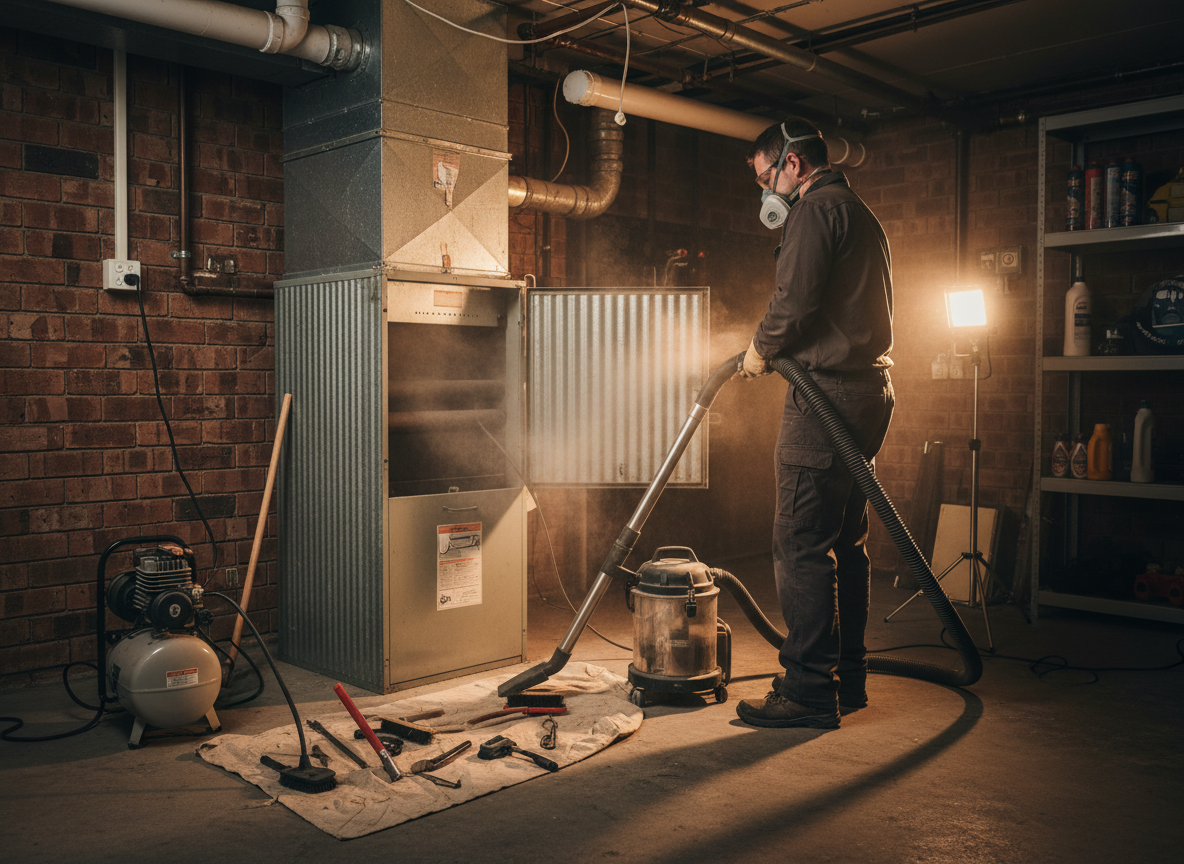
Furnace cleaning in the City of Wyndham targets the heat exchanger, blower motor and return plenum where fine red dust from the basalt plains settles during warm summers. Homes in Tarneit and Wyndham Vale built between 2005 and 2015 often have flexible duct runs that trap lint from nearby paddocks, reducing airflow and raising running costs. Technicians at 114B Watton St carry portable HEPA units sized for single-storey brick veneer properties common along the Werribee River corridor.
Access panels in older Riverbend estates are frequently sealed with paint or located behind built-in robes, requiring careful removal to avoid damaging gyprock. Warm summer temperatures dry out the soil around slab edges, allowing fine silt to enter return air paths through small gaps. Cleaning restores static pressure without touching gas valves or altering any combustion settings on the furnace itself.
In Hoppers Crossing and Werribee South properties, shared laundry walls often place furnaces near high-moisture zones, leading to heavier dust cakes on the evaporator side. A full clean includes brushing the squirrel-cage blower and vacuuming the condensate tray area to prevent re-circulation of musty particles once the system restarts.
Seasonal Dust Patterns
Warm summers increase airborne pollen and grit from the open plains around Werribee Park, pushing more material into return vents. Homeowners notice weaker airflow first in bedrooms furthest from the furnace, a common layout in Tarneit estates.
Technician insight
In Werribee the thing that catches most people out with furnace cleaning is the flexible duct runs in Tarneit homes built on slab. Once summer dust cakes inside those bends, standard brushes miss the lower curve and the restriction stays until you pull the section.
Restricted Airflow in Wyndham Vale
A single-storey home in Wyndham Vale reported weak airflow from every vent during the first warm spell. Inspection showed compacted dust in the main return trunk where the flexible duct met the furnace platform. After removing and cleaning the section plus the blower assembly, static pressure returned to normal and the system cycled correctly.
How it works
- 1
System Isolation
Switch off power and gas at the furnace in the garage or laundry, then confirm no airflow through the ducts before opening access points.
- 2
Blower and Heat Exchanger Access
Remove the blower door and any internal panels to reach the motor, wheel and primary heat exchanger surfaces.
- 3
Agitation and Extraction
Use rotating brushes and negative-air equipment to dislodge and capture debris without pushing material into branch lines serving Riverbend rooms.
- 4
Reassembly and Test
Replace all panels, restore power and run the system through a full cycle to verify airflow and check for unusual noise.
Pricing
Cost depends on furnace location, number of returns and whether flexible duct sections need extra agitation time.