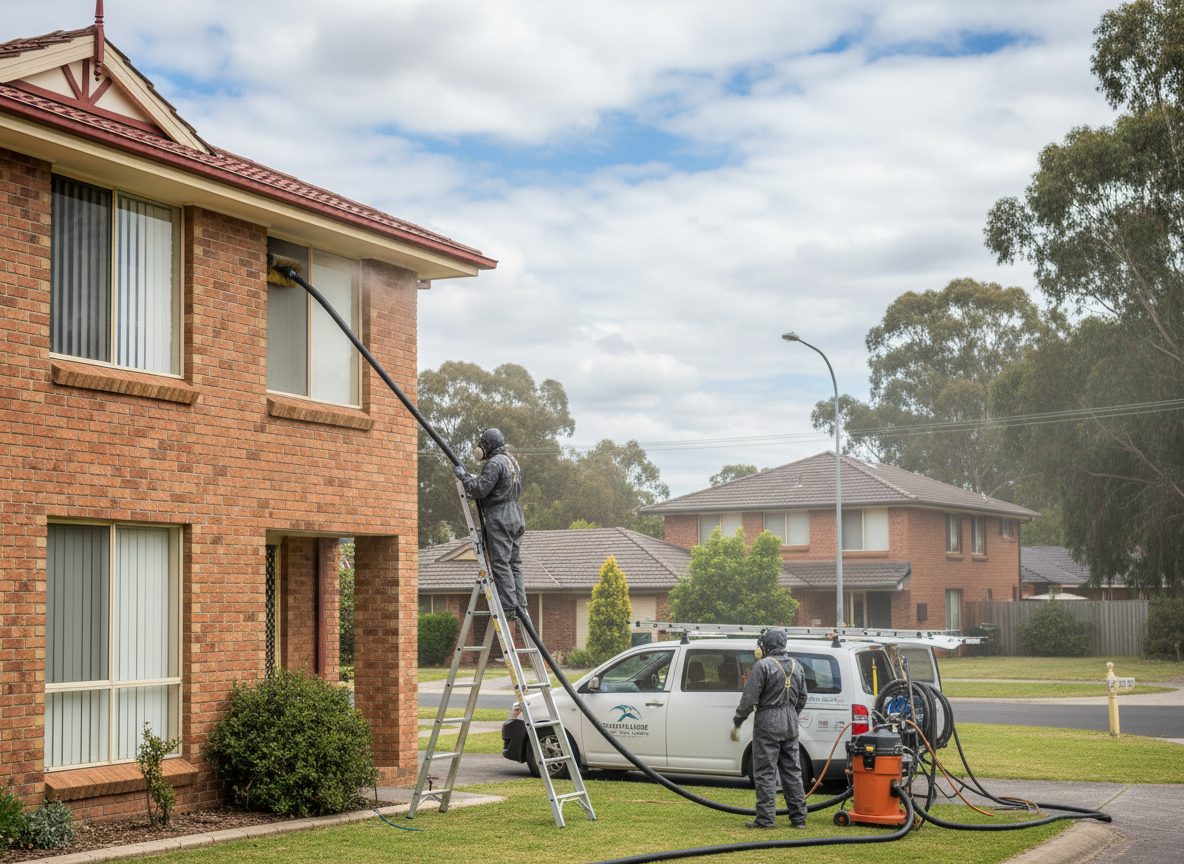
Werribee homes built from the 1970s through 1990s often have rigid metal duct runs that collect fine dust and river silt tracked in from the Werribee River flats. In the City of Wyndham, summer heat drives air conditioning use for months, pulling pollen from open grasslands near the Werribee Open Range Zoo straight into return vents. Whole house air duct cleaning must reach every branch, including the long runs common in Tarneit estates where builders used flexible duct that sags and traps debris. Skipping the supply lines leaves most of the system untouched.
Temperate winters bring less rain, so dust stays airborne longer and settles inside ducts serving single-storey weatherboard houses in Riverbend and Wyndham Vale. These older homes frequently have shared trunk lines feeding multiple bedrooms, so one blocked section affects the whole house. Technicians use negative-air machines at the main trunk to prevent dust from escaping into living areas during cleaning. Without this step, fine particles settle on carpets and furniture throughout the property.
Newer double-storey homes in Hoppers Crossing and Werribee South often have ducts routed through roof spaces that reach 50 degrees Celsius on summer afternoons. The heat bakes dust into a hard layer that requires agitation tools rather than vacuum alone. Whole house air duct cleaning here includes brushing every register boot and sealing gaps where vermin have chewed entry points. Missing these spots allows allergens to recirculate every time the system runs.
Technician insight
In Werribee, the thing that catches most people out with whole house air duct cleaning is the long flexible runs in Tarneit homes that sag behind insulation; once dust cakes inside those bends, vacuum alone never reaches it and you have to open the roof space in summer heat to agitate properly.
Riverbend Family Home with AC Running Constantly
Homeowners noticed musty smells when the system started each morning. Inspection showed compacted dust and pollen in the main trunk feeding three bedrooms. We agitated the full length of rigid and flex duct, extracted everything under negative pressure, and restored airflow without disturbing the carpet.
How it works
- 1
Initial System Inspection
Map every supply and return run from the furnace or air handler, noting access points in ceiling spaces common to Werribee homes.
- 2
Register and Boot Removal
Take off every vent cover in living areas and bedrooms, then vacuum visible debris before sealing the system for negative pressure.
- 3
Agitation and Extraction
Use rotating brushes and compressed air to dislodge dust along the full length of ducts while the vacuum draws material out at the main trunk.
- 4
Final Register Cleaning and Reassembly
Wash and reinstall all vents, then run the system to confirm airflow and check for any remaining loose material.
Pricing
Cost varies with number of outlets, duct material and access difficulty in single versus double storey homes.